

Healing the planet from the ground up
From the frozen frontiers of Antarctica to Africa’s diverse soils and seas, Thulani Makhalanyane is uncovering how microbes shape life — and why understanding them could transform our future.
If you want to tackle Africa’s biggest problems — climate change, habitat destruction, human disease — start small. Microscopically small.
Bacteria, viruses, fungi, and other tiny organisms, especially when they interact in microbiomes, have an outsized impact on life. These miniature ecosystems may even provide powerful tools to protect natural systems.
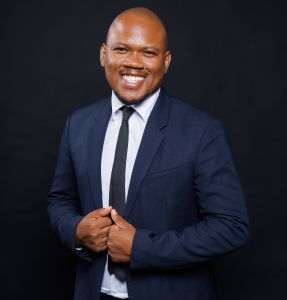
“Our earth is a very sick patient,” says Prof Thulani Makhalanyane, “I’m not a medical doctor. But I see myself as a healer — of the planet . . . That’s my job.”
Makhalanyane is a leading microbiologist and principal investigator of the African Microbiome Project, an initiative working to bring together African microbiologists and support research on the continent.
Tiny but mighty
Microbes, says Makhalanyane, are often overlooked in favour of studies on megafauna, including seals and other Southern Ocean species. But they are far more significant than most people realise.
“Microbes are essentially at the centre of every niche that you can study in the environment or linked to human health,” says Makhalanyane. Without these tiny engineers, ecosystems would grind to a halt. Nutrients would not return to the soil, carbon would accumulate rather than be stored, and the very foundation of food chains would crumble. In short, while megafauna grab the headlines, microbes quietly keep the planet alive.
People mostly think about microbes when a pathogen is involved, he says, but that’s an incorrect way to look at it “because there’s a lot of potential in microbial byproducts that could be harnessed in pharmaceuticals and other applications that we are completely neglecting.”
Africa’s potential
Across Africa, microbiomes include some of the most diverse terrestrial and marine environments, and the most genetically distinct hosts. This means the continent is a hotspot of untapped scientific potential. Its rich and varied microbial communities could hold solutions to pressing global challenges — from new medicines and sustainable agriculture to carbon management and ecosystem restoration.
By understanding and protecting these microscopic powerhouses, researchers are not just studying life; they are unlocking tools that could shape the future of health, food security, and environmental resilience across the continent and beyond.
Data gaps
Yet genetic sequencing — the process of mapping the genetic codes contained in the DNA molecules of microorganisms — is still dominated by studies from the Global North, with relatively few focusing on African ecosystems.
And of those that do, says Makhalanyane, much of the research is not especially representative of Africa, nor as useful as it might be for the wellbeing of the continent and the health of its people.
He points to studies by US researchers into human gut microbes, driven by interest in probiotics and gut health. “They’ve compared people in the US to the Hadza population in Tanzania, and that’s actually where most of the metagenomic data have come from throughout the continent,” he says.
The Hadza are one of the world’s last hunter-gatherer communities, numbering around 1,200 to 1,500 individuals near the remote Lake Eyasi in north-central Tanzania. While they provide a useful point of comparison for studies on African and African-descended populations, they are hardly representative of a vast continent of 1.5 billion people — many of whom belong to some of the most genetically diverse populations on the planet.
To address this, the African Microbiome Project seeks to promote sequencing of African microbiomes, improve access to the necessary technology, and train researchers in ethical and effective study design.
One of the key methods is genome-resolved metagenomics, which reconstructs the genetic blueprint of individual microbes in their natural environments using computational tools. Put simply, it allows scientists to see the full genetic makeup of microbes without needing to grow them in a lab — something that’s only possible for a tiny fraction of microbes, less than 3%.
By bypassing the need for culturing, researchers can finally study the remaining 97% that thrive in natural communities, whether in the human gut, a forest soil sample, or the deep blue sea.
Research in action
The African Microbiome Project spans about 10 countries and involves postdoctoral researchers, PhD candidates, and masters and honours students. Their work explores how microbes respond to environmental changes — and how that knowledge can be applied to real-world challenges.
And this work must be conducted responsibly, says Makhalanyane. He warns that without clear ethical frameworks, studies can drift into bioprospecting, where local communities do not benefit from commercially valuable discoveries.
“In many African countries, there is little by way of ethical guidance for human microbiome research. Often, only an ethics committee exists for a particular programme. So researchers from Europe or elsewhere may obtain clearance in their own countries and then conduct studies here without engaging local communities,” he says.
Beyond ethics, he emphasizes the need for stronger policy interventions to build a sustainable research ecosystem — integrating microbiomics into university curricula, establishing research hubs, hosting conferences and training programmes, and supporting microbiome-focused startups.
Projects underway
Among the projects under way are studies:
· investigating why certain microbial “clans” thrive in extremely cold climates;
· using microbes to develop more sensitive indicators of algal blooms in coastal ecosystems caused by pollution;
· examining how microbes interact with melting sea ice in the Southern Ocean and the release of sulphides linked to climate change; and
· exploring acne and how diet affects the gut and skin microbiota of Black South Africans.
The acne study involves 135 participants from rural KwaZulu-Natal and urban Western Cape areas. Researchers collect dietary data and stool samples to explore whether traditional fermented foods like amasi affect microbial balance, possibly worsening acne. Findings may lead to new interventions, including phage therapy — the use of viruses to control bacteria.
“We’re using acne because it’s something measurable,” says Makhalanyane. “But the insights could apply to other metabolic diseases.”
A career of exploration
Makhalanyane earned his PhD cum laude at the University of the Western Cape in 2013. His doctoral work took him to Antarctica, where he studied microbial ecosystems that, because of the continent’s harsh climate, are less prolific yet remarkably stable — making them ideal for modelling the effects of climate change.
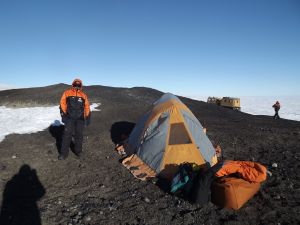
He describes the opportunities to do research on Antarctic expeditions as unparalleled, noting that the region’s ocean currents and ecosystems are of fundamental importance to the planet’s health
He spent a decade at the University of Pretoria, rising from postdoctoral fellow to full professor, before joining Stellenbosch University in 2023.
Antarctica remains close to his heart. “I love Antarctica because it’s a cool environment,” he once told his Stellenbosch inaugural lecture audience, pun intended.
He saluted his collaborators, quoting Into the Wild author and mountaineer Jon Krakauer: “Antarctica has this mythic weight. It resides in the collective unconscious of so many people, and it makes this huge impact, just like outer space. It’s like going to the moon.”
Parental inspiration
Makhalanyane credits his parents for nurturing his intellectual curiosity. Like many parents, they wanted him to become a doctor.
Although he didn’t take that path, he has, in his own way, become one — trying to heal not people, but the planet itself. For him, microbes are more than academic subjects — they are allies in understanding and protecting the health of people, animals, and the planet.
This story was produced with support from Jive Media Africa, science communication partner to Oppenheimer Generations Research and Conservation (OGRC).
Author
- Healing the planet from the ground up - December 12, 2025
- Investing in nature: African ministers call for rethink on conservation funding - October 17, 2025
- From ponds to power plays: South African scientist tackles invasive plants with game-changing research - October 16, 2025